Why Social Leadership Still Matters at an Executive Level

Updated: Nov 19, 2025

At the executive level, time is often consumed by strategic priorities, investor demands, board expectations, and navigating organisational complexity. In the midst of these pressures, one critical area often goes undefined: a leader’s visible leadership narrative.
Which is why we celebrate - and always enjoy working with - companies who continue to invest in their own leaders. Step forward Dassault Systèmes, a globally-recognised organisation that provides businesses and people with virtual twins to imagine sustainable innovations capable of harmonising product, nature and life. For some time now, Dassault Systèmes has championed and actively campaigned for diverse perspectives because they know it drives better business outcomes and more human-centric innovation. And now the big question: How do they do it?
One way, is that they host an annual 'Advocacy Day' for their leaders at HQ in Vélizy-Villacoublay, France, to champion their people.
An additional layer is bringing in an external partner, such as TinyBox Academy. We've been working with Dassault Systèmes since 2022, helping them to amplify the voices of their global employees, teams and executives. And this November, Raj was invited back to present a keynote on Social Advocacy as part of her Social Leadership concept. She tagged on an extra day to deliver her executive coaching programme too. Dassault Systèmes see the extra, more creative value that these training opportunities gives their leaders, including nurturing inclusive leadership. Because the reality is, most executive leaders are already leading effectively, but they haven’t always paused to clarify how they lead, or what story that leadership tells.
The assumption is that performance speaks for itself, but in today’s environment, performance without visibility is no longer enough.
Leadership is no longer judged solely by outcomes, it’s also measured by clarity, consistency, and how well leadership aligns with stakeholder expectations.
This is where Social Leadership comes in. It provides the structure for alignment between internal values and external visibility. It is not about self-promotion or performance theatre. Rather, Social Leadership is about leading with intention across all touch points, digital, in-person, internal, and external, so that executive presence becomes a strategic asset, not an afterthought.
When this alignment is missing, executives risk being misunderstood, misrepresented, or simply overlooked. And at this level, being unseen can have business consequences.
From Performance to Presence
Executives today are under increasing pressure to not only deliver results but also serve as visible role models for company culture, purpose, and social values. The rise of digital platforms has made leadership more transparent than ever, employees, customers, and investors are no longer influenced solely by company reports or press releases. They are influenced by what they see leaders saying (or not saying) on LinkedIn, at industry events, in internal videos, or in how they show up in their own organisations.
Visibility now defines impactful leadership.
This is not about chasing trends or becoming a personal brand. It’s about authentically representing the values, beliefs, and priorities that drive decision-making—and doing so consistently.

Take Dassault Systèmes as an example. The company is not only known for its leadership in 3D design and digital twin technologies, but also for its commitment to inclusive leadership. The executive team reflects a growing dedication to gender diversity, with several women in senior leadership roles across strategy, operations, and industry solutions. This representation is not just symbolic, it reinforces Dassault’s belief that diverse perspectives drive better business outcomes and more human-centric innovation.
Sharing this kind of leadership story, transparently and with intent, is essential for attracting new talent, building credibility, and remaining competitive. People are paying attention. If a leader is not contributing to the conversation about who they are and what they stand for, others will shape that narrative for them. This is why visibility matters. Executive presence must be deliberate, consistent, and connected to both individual values and organisational strategy.
Aligning Identity, Values, and Influence
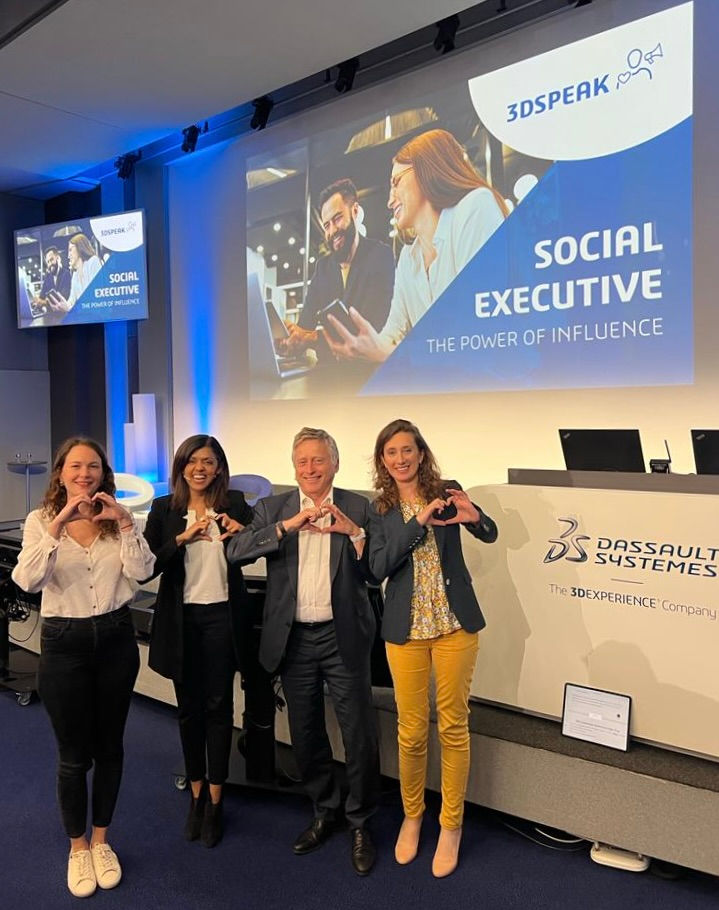
Through the 3DS Executive Coaching Program, senior leaders are guided through a process of defining and articulating a leadership style that reflects their personal values and strategic priorities.
This is not about learning how to post on LinkedIn or giving templated speeches. It’s about connecting identity with influence, creating alignment between who they are and how they lead.
This process begins with reflection and clarity. Many executives operate with deeply held values that influence their leadership style but have never taken the time to articulate those values out loud. This disconnect can lead to missed opportunities to build trust, inspire teams, or shape organisational culture.
Social Leadership provides a structured way to bring these values to the surface and express them in ways that resonate with stakeholders.
For example, a leader who runs every morning might be drawn to it not only for physical fitness but because it connects them to their city’s sustainability goals. Someone with a deep love of history might be unknowingly guided by a belief in long-term thinking and transformation. These are not just hobbies, they are entry points to a more relatable, meaningful leadership narrative.
Once these core drivers are identified, we map them into content pillars, themes that allow executives to consistently communicate who they are and why they lead the way they do…as easily as possible with the least amount of time commitment. This alignment ensures that their online presence, keynote speeches, town hall messages, and leadership behaviours all stem from the same authentic foundation.
When executives lead from a place of alignment, they create trust. They are no longer just delivering strategies, they are communicating purpose. And in a market where stakeholder trust is the currency of influence, that kind of clarity is priceless.
Coaching for Clarity
This depth of clarity and confidence doesn’t happen by accident. It takes intentional coaching, deep listening, and sometimes, a little disruption of old assumptions. A strong executive coach is not there to tell leaders how to be more polished or marketable. Instead, the goal is to uncover the elements that already make them distinct, and then support them in expressing those elements with confidence and consistency.

Coaching is about holding space for reflection. In fast-paced executive environments, there is rarely time to stop and ask questions like:
What do I want to be known for?
What values are influencing my decisions?
What legacy am I shaping through my leadership?
These are not abstract questions, they are foundational to leadership clarity, and the answers shape not only communication but also culture, strategy, and trust.
Many executives are surprised to discover how personal insights can unlock professional resonance. Community volunteering is why they champion inclusion in the workplace, or they sponsor the next generation because they believe in empowerment. These insights become content, messaging, values, and vision. Through this work, executives develop a personal leadership narrative that feels real, because it is.
The Benefits of Social Leadership at the Executive Level
Executives who engage with this process often experience a significant shift in how they show up, how they are perceived, and how they lead.
The results are measurable and meaningful:
Stronger executive presence, both online and offline
Increased trust and credibility with internal and external stakeholders
Clearer articulation of leadership values that guide decision-making
Greater impact in high-stakes communication, including investor calls, town halls, and external speaking
Enhanced talent engagement and retention, as leadership becomes more relatable and transparent
A leadership reputation that reflects both performance and purpose
A clear and intentional leadership narrative positions executives to serve as social leaders within the business, leaders who model visibility, emotional intelligence, and purpose-led communication. These qualities cascade down into teams and culture, reinforcing the kind of environment where innovation and engagement thrive.
At the highest levels of business, leadership visibility is not just a communication strategy, it’s a catalyst for influence, innovation, and impact.
Leadership at the executive level is about more than setting direction, it’s about setting the tone. Social Leadership is the practice of aligning how a leader leads with how they are seen, heard, and understood across all platforms and conversations.
This alignment builds trust. It creates cultural coherence. And it ensures that the leader’s voice adds value to the broader narrative of the business.
Ultimately, Social Leadership is not about having more to say, it’s about saying the right things, with the right intent, in the right way.
And that starts with knowing who you are, what you stand for, and how you want to lead.
References:
Edelman: Trust Barometer 2023
Harvard Business Review: The Leader’s Guide to Corporate Culture


Comments